
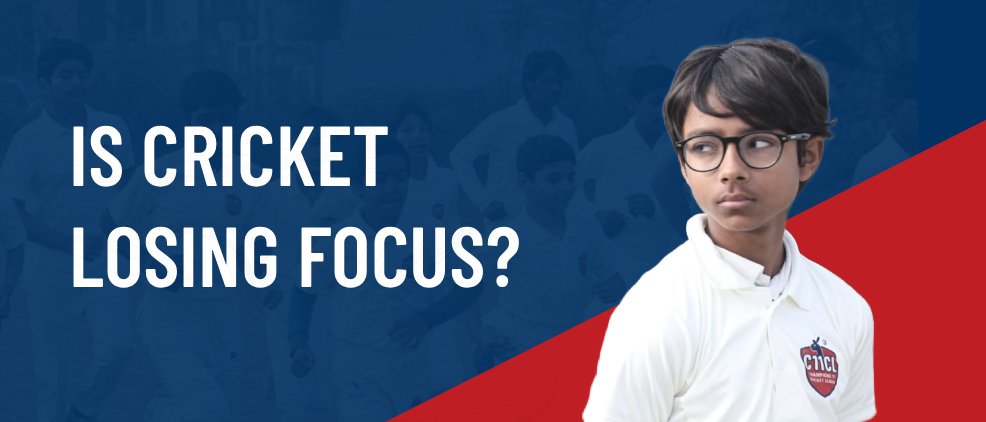
For decades, the dream of a young Indian cricketer was singular and focused: perform consistently in matches, earn selection on merit, and progress through the ranks with discipline and patience. The pitch was the classroom, the match was the examination, and performance was the only currency that mattered.
Today, that focus is fragmenting.
A quick look at social media reveals young cricketers spending as much time curating content as correcting technique. Slow-motion cover drives, stylised bowling actions, gym reels, and brand collaborations often receive more attention than full-length match performances. Visibility has begun to compete with improvement—and in many cases, replace it.
This is not merely a social media trend. It is a symptom of a deeper issue: cricket is losing its center of gravity.
When Visibility Overtakes Purpose
Cricket has always demanded long attention spans—hours of practice, days of matches, years of patience. Today’s digital ecosystem rewards the opposite: instant impact, short attention, and surface-level excellence. A single reel can reach more people than a district tournament at the grassroots cricket level, but it cannot measure temperament, decision-making under pressure, or the ability to adapt across sessions.
For young cricketers, this shift creates confusion. When recognition comes faster online than on the field, the incentive structure changes. Improvement feels slow; visibility feels immediate. Over time, the focus moves away from mastery and towards presentation.
This does not make young players misguided—it makes them uncertain. In a system where grassroots pathways are unclear, feedback is inconsistent, and opportunities feel unpredictable, social media appears to offer control. But control without direction often leads to distraction.
The Real Problem Is Not Instagram
Blaming social media is easy—and incomplete.
Cricket begins to lose focus when players do not trust the system evaluating them. When years of training provide no clear benchmarks, no structured progression, and no transparent selection process, players naturally seek validation elsewhere.
The rise of influencer-style cricket is not rebellion; it is compensation. It fills the gap left by unreliable pathways and limited exposure. The danger lies not in being visible, but in becoming visible without purpose.
Cricket is a sport built on repetition, resilience, and restraint. These qualities develop slowly and quietly. When systems fail to recognise them, the sport itself begins to lose its depth.
Re-centring the Game: The Role of Structured Platforms
The Champions 11 Cricket League (C11CL) was created to restore this lost focus. Established in 2025, C11CL is built on a simple belief: talent should never be assessed by chance, geography, or online popularity. It should be evaluated through performance, under professional and transparent conditions.
Through open, state-wise cricket trials and structured competitive formats, C11CL provides young cricketers with clarity—where they stand, what they need to improve, and how they can progress. When players understand the pathway, focus returns to the pitch.
Fair systems do more than select players; they shape behaviour. When effort is consistently recognised, discipline replaces distraction.
Social Media as a Mirror, Not the Map
C11CL does not discourage digital presence. We encourage correct alignment. Social media should reflect the journey, not define it. Match situations, training struggles, pressure moments, and gradual improvement tell far more powerful stories than rehearsed perfection.
Cricket loses focus when influence precedes excellence. It regains focus when influence follows it.
Young players who invest more time in appearance than ability, or more energy in content than conditioning, risk long-term stagnation. Popularity may arrive quickly, but it fades just as fast. Skill, temperament, and game awareness endure.
Bringing the Game Back to What Matters
Cricket is not losing players—it is losing attention. The game is being pulled in multiple directions, away from its core values of patience, preparation, and performance.
The solution is not to reject modern tools, but to anchor them correctly. Young cricket leagues, institutions, and selectors must provide systems that reward focus, consistency, and genuine progress. When that happens, young cricketers will naturally return their attention to where it belongs—on the pitch.
At the Champions 11 Cricket League, our responsibility is clear: to ensure that visibility is earned through merit and focus is restored through fairness. Because while formats may evolve and platforms may change, cricket will only thrive when its foundation remains performance-first.
The game regains its focus when the spotlight follows the scorecard—not the screen.