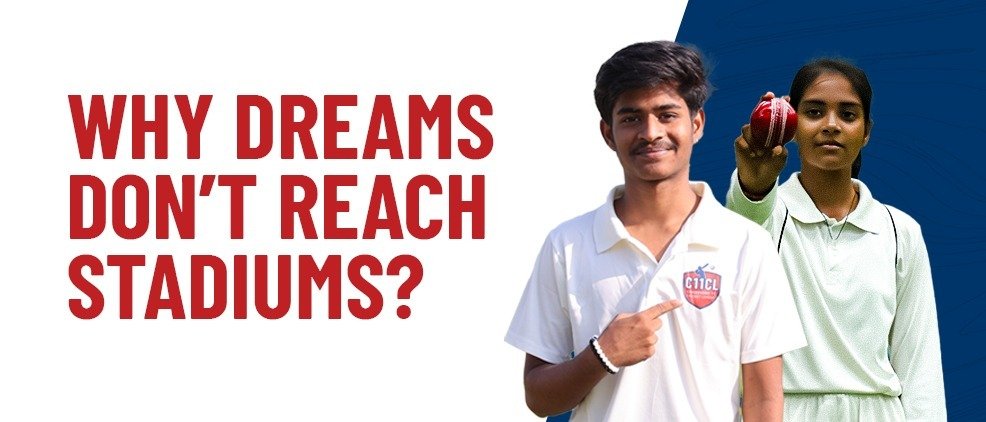
Cricket is not just a sport in India—it is an emotion woven into everyday life. Even people who don’t consider themselves cricket fans know the score when India is playing, because the game becomes the heartbeat of the nation whenever the team steps onto the field. Yet, despite this unmatched passion, cricket is still widely feared as a career. Families who cheer every six and wicket often advise their children to treat cricket as a hobby, not a profession. Why does this contradiction exist? And how is C11CL beginning to break this long-held belief?
Why Cricket as a Career Still Feels “Too Risky”
Most children who grow up watching cricket dream of playing for India. But the dream fades when it meets social pressure, academic expectations, and concerns about financial security. The “Not everyone becomes a Kohli or a Siraj” mindset overshadows talent and discourages countless young players. Several deeply rooted factors feed this fear:
1. Massive Popularity, Limited Professional Spots
India’s cricket fanbase is enormous—and so is the number of aspiring players. But the professional pathway is extremely narrow.
• Only a few dozen players receive BCCI central contracts.
• IPL squads have limited slots and pick only a few hundred players out of thousands who register.
The math is daunting: millions of dreamers, thousands of paid opportunities. This mismatch creates anxiety, especially for families seeking stability.
2. Financial Uncertainty Below the Top Tier
IPL contracts and central retainers may make headlines, but they represent the top 1%.
Most domestic players earn irregular incomes through match fees or temporary tournaments. One missed selection, injury, or dip in form can abruptly end financial stability. For many households, cricket feels like a gamble, whereas academics promise predictable futures.
3. Dependence on Form, Fitness, and Injury-Free Seasons
Cricket is physically demanding. Fast bowlers face back stress fractures, batters encounter repetitive strain injuries, and overuse injuries are common at the grassroots due to poor load management. A single injury can derail a budding career. Without professional rehabilitation, many players cannot continue long enough to reach stability.
4. Uneven Infrastructure and Opportunity Gaps
Cities like Mumbai, Delhi, and Bangalore dominate India’s talent pipeline at the grassroots cricket level due to better academies, support staff, and exposure. Meanwhile, smaller towns lack quality coaching, fitness centres, physiotherapists, and scouting opportunities. A talented player from a weaker region may remain invisible simply due to lack of exposure—not lack of ability.
5. Academic Pressure and Social Norms
Indian society still prioritises conventional education over sports. Families fear instability, societal judgment, and the unpredictability of sports careers. Research consistently shows that family pressure and economic concerns remain the biggest barriers to choosing sports professionally.
What Franchise Leagues Solve—and What They Don’t
The IPL revolutionised global cricket. T20 leagues worldwide offer visibility, branding, and income opportunities. Yet these leagues also:
• Reward short-format specialists
• Create unpredictable, performance-dependent income
• Do not solve the lack of structured pathways at the grassroots level
Franchise leagues expand opportunities—but they do not eliminate the deeper structural risks of a cricketing career.
Where the Real Change Begins: Domestic, Organised, Accessible Leagues
Most challenges young cricketers face—limited exposure, unclear pathways, financial inconsistency, and lack of match experience—are solvable through a strong domestic framework. Grassroots leagues that are organised, reliable, and professionally managed can completely reshape the cricketing landscape.
And this is exactly where C11CL steps in.
How C11CL Is Reframing Cricket from a Risky Dream to a Real Opportunity
C11CL is not just conducting tournaments—it is building an ecosystem.
1. Structured Pathways: Local →State → Auction → National
C11CL creates transparent ladders of growth. When players compete regularly in standardised formats, selection becomes performance-based instead of connection-based.
2. Consistent Match Experience
Regular, competitive matches through cricket trials allow young players to build confidence, improve skills, and showcase their growth. More matches mean more visibility and more data for selectors.
3. Increased Playing Opportunities
By running multiple leagues across regions, C11CL expands the experience of professional cricket for several players who can earn through cricket later—something India desperately needs.
4. Equal Access Across Regions
Players in smaller towns finally get the same platform as players from traditional cricket hubs. C11CL bridges the infrastructure divide and ensures every aspiring cricketer gets a fair chance.
5. Player-Centric Sponsorships
Unlike prize-focused tournaments, C11CL introduces sponsorships designed for player development:
• Coaching support
• Nutrition
• Gear
• Travel
• Performance tracking
This strengthens career continuity and reduces financial barriers.
The New Narrative: Cricket Is Not Just a Passion — It Can Be a Profession
For decades, cricket was adored by fans but feared as a career. Limited slots, unstable earnings, injury risks, weak infrastructure, and social pressure created a mindset of fear. C11CL is rewriting that mindset.
By offering structure, transparency, opportunities, and financial pathways, C11CL is turning cricket from a high-risk dream into an organised, achievable career option. It opens the gates for tens of thousands of players who have never had access to a professional platform.
C11CL is not just changing cricket.
It is changing how India sees cricket as a career.