The cricketing scene of India has always been a source of raw, untapped talent from which the country has been able to draw. The largest population of this talent can be found in the remote village alleys, school competitions, dusty playgrounds, and district academies. When the Champions 11 Cricket League (C11CL) was established in 2025, its objective was to create an unambiguous, meritocratic way for these kids to be picked, regardless of their background, gender, or resources.
The five-stage selection process of the league starts with open state-level trials and ends at the national championships, where every player can compete within the limits of his performance. Still, young players keep on making avoidable mistakes even in this open and fair system. However, even with such a perfect system, a lot of the aspiring cricketers still do not get selected, not due to the absence of raw talent, but through mistakes that could be avoided in technique, mindset, or even approach. For a grassroots platform like C11CL, these errors are equivalent to losing an opportunity – not only for the player but also for the league.
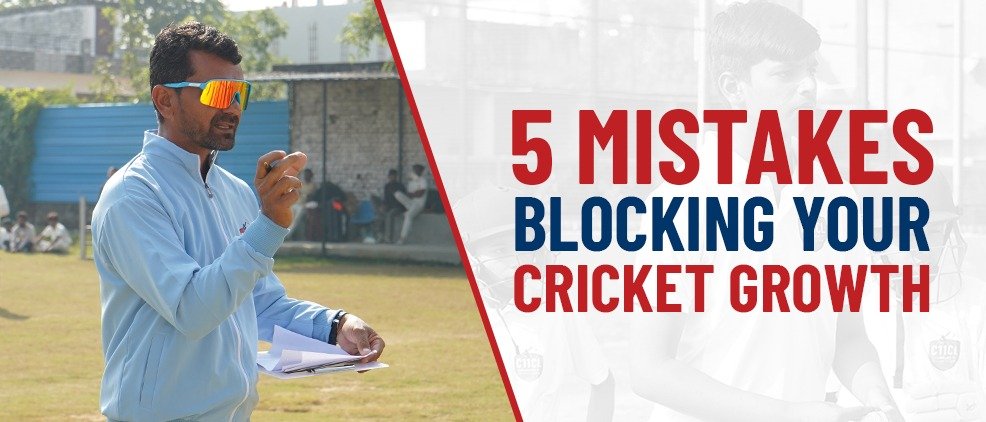
In this article, we will look into five typical traps that stop the development of young cricketers and provide them with tips to stay clear of such obstacles to increase their chances in the C11CL cricket trials and even further.
1. Overlooking the desired fitness levels at the grassroots cricket level
One of the greatest errors that inexperienced players often make is to think that the ability to play with the bat or the ball alone is sufficient for victory. In fact, fitness has become one of the most important contributors to the outcome in cricket nowadays. Different studies from youth development programs all over the world indicate that more than 40% of young cricketers do not possess the endurance or agility levels that are considered the minimum standards at the competitive levels. This difference usually becomes noticeable when the players are subjected to playing matches one after the other, longer formats of play, or under very demanding physical conditions.
However, many youngsters still consider fitness to be something that is not mandatory. The very few who are really talented also find it difficult when their bodies can’t endure the strain of several trials or matches, something that is particularly true in a league like C11CL, where player selections go through rounds.
How to avoid the mistake:
It is necessary for the young players to incorporate into their routines, on a regular basis, the training for endurance, flexibility, and strength. It is very easy and simple to do the home-based sessions that involve things like sprinting, core workouts, agility drills, and stretching to make very big differences in performance and also in the prevention of injuries. The fitness of a good standard not only allows better execution of the skills but also provides an uplift in the form of confidence and mental strength.
At C11CL, a perfect balance of fitness and cricket training is maintained to nurture the next generation of cricketers.
“I realised that unless you’re fit, you can’t perform at your best for long. Fitness is everything,” stated star Indian cricketer Virat Kohli.
2. Not working on sharpening the basics
In youth cricket, the most frequent feature is the aspiration to source the play of T20 cricket, both for batters and the speed of international fast bowlers. While seeking motivation is worthwhile, it frequently results in neglect of the basics. The research from the evaluation of coaching at the grassroots cricket level in India and other countries has established that technical flaws are the main reason for the inconsistency among young players, the most affected group being from 12 to 18 years old.
However, a lot of young batters avoid footwork drills and prefer to practice hitting big shots, while bowlers try to speed up their deliveries before they master line, length, and stability of action. Even fielding is often regarded as the least important area of all, although it is a major selection factor in modern cricket.
“If your basics are strong, you can build anything on top of them,” stated Master Blaster Sachin Tendulkar.
How to avoid the mistake:
Young cricketers need to schedule specific practice time for mastering their basic techniques, and C11CL is the best cricket platform to improve the same skillset. Repeatedly doing the footwork patterns, shot selection, building a consistent bowling action, and doing the basics of fielding, such as catching positions and movement, can make a great deal of difference. Good technique not only helps to enhance performance but also lowers the chance of injury, especially for bowlers and enhances working “to improve cricket skills”.
3. Talent without Intelligence
Another common problem is putting too much emphasis on individual performance without realising match situations. Data from global youth-cricket development reports very often show that more than fifty per cent of young players have difficulties with tactical decision-making, whether it is rotating the strike, bowling to a plan, or adapting to the pitch conditions.
“It’s important to understand the game—what the team needs, what the situation demands,” former Indian captain MS Dhoni exclaimed.
How to avoid the mistake:
Developing game awareness takes active watching of matches, not just for fun but for study. Players need to see the positioning of the fields, the strategies of the strike rotation and the way bowlers are setting up the dismissals. Playing longer format or multi-day matches also enhances patience and improves tactical thinking. Even a very simple conversation with others or with a mentor after a match helps build up one’s situational understanding, and this is where an established platform like C11CL steps in, where their experienced coaches provide the tips to focus on different types of match situations.
4. Panicking under pressure
Pressure management is a key factor that sets players apart in cricket. Young athletes often use psychology as an object to cope with their nerves, fear of failure, and even overexcitement while playing in a tournament situation. These feelings have grown stronger and resulted in the players taking wrong shots, being aggressive for no reason, or being unable to perform when it matters most.
“Calmness under pressure isn’t something you’re born with. You learn it by embracing tough moments,” said former Indian captain Rahul Dravid.
How to avoid the mistake:
At C11CL, each player is taught to see every ball as a new experience and work on their goals, which are simple and based on the process. Among the different methods to cope with the situation, deep breathing, small mental prompts such as “watch”, “stay still”, or “focus”, and sticking to routines take nerves under control. Making the mistake is acknowledging one still needs to learn when playing cricket, which strengthens one’s character. The more young players are involved in matches, the more their ability to deal with the pressure improves.
5. Lack of proper guidance
Inadequate facilities or resources pose a big challenge to young cricketers, especially in rural areas, so they often have to train alone or only with friends. Although self-practice is considered an important part of training, the lack of proper guidance can lead a player to make the same mistakes over and over again, and eventually, poor technique and limited growth will be the result. The youth development studies often cited for countries where the players with some form of structured coaching or mentorship improved almost 30-35% faster than those who trained completely by themselves.
“Every player needs someone who can show direction. It makes the road clearer,” emphasised former Indian skipper Rohit Sharma.
How to avoid the mistake:
Youngsters should take the initiative and ask for feedback from the experienced C11CL coaches and mentors. In fact, structured practice doesn’t have to cost a fortune; all it takes is drills with a purpose, repetition, and correction. It is also very helpful to record yourself batting or bowling and then watch it again. C11CL specialises in creating the perfect atmosphere where players can learn, excel and share tips in order to showcase their talent at the next level.
Final Thoughts
These are not just cricketing mistakes — these are milestones in a young player’s growth journey.
And in a merit-based league like C11CL, these very moments can become the turning points that get a player noticed and remembered.
Every aspiring cricketer dreaming of cracking the tough C11CL selection—or any serious domestic/professional circuit—must walk a dual path: one of personal development and one of cricketing skill. The five common mistakes we spoke about are not career-enders; they are mostly avoidable with the right mindset.
What truly matters is honesty with oneself, self-awareness, discipline, and the willingness to learn, unlearn, and adapt.
Because at the end of the day, real cricket rewards real growth.